


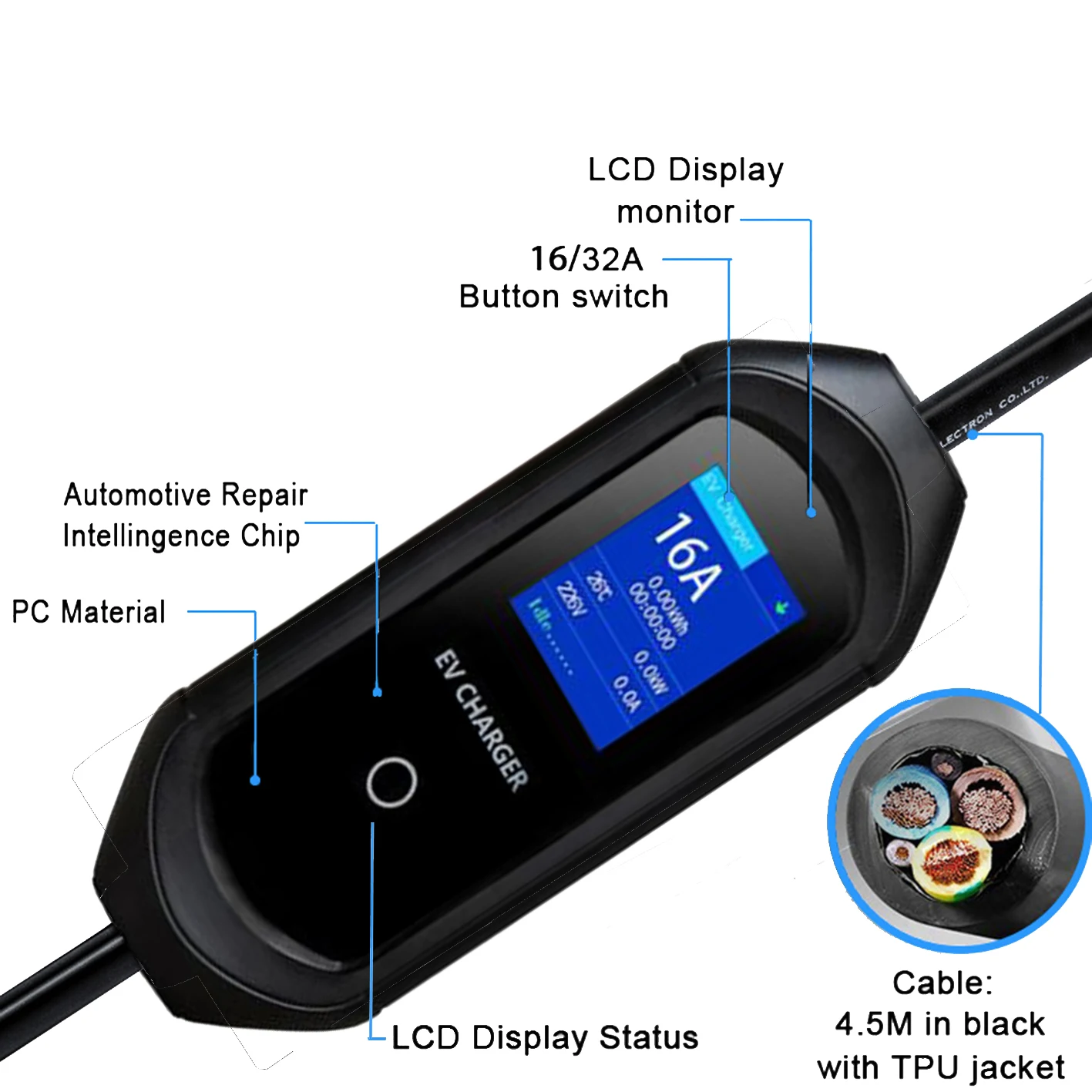
Portable Type 2 charger with Wi-Fi app and delayed start
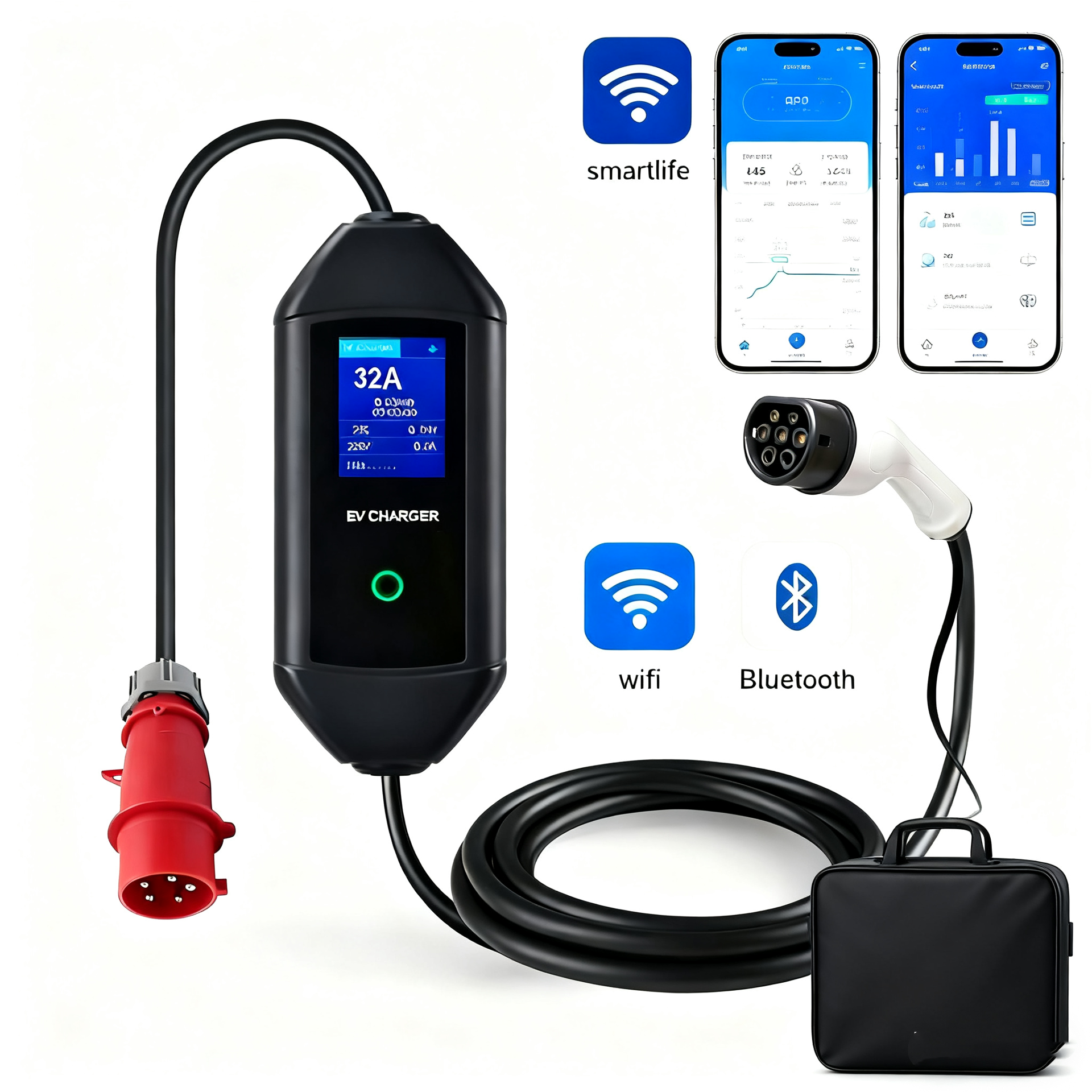
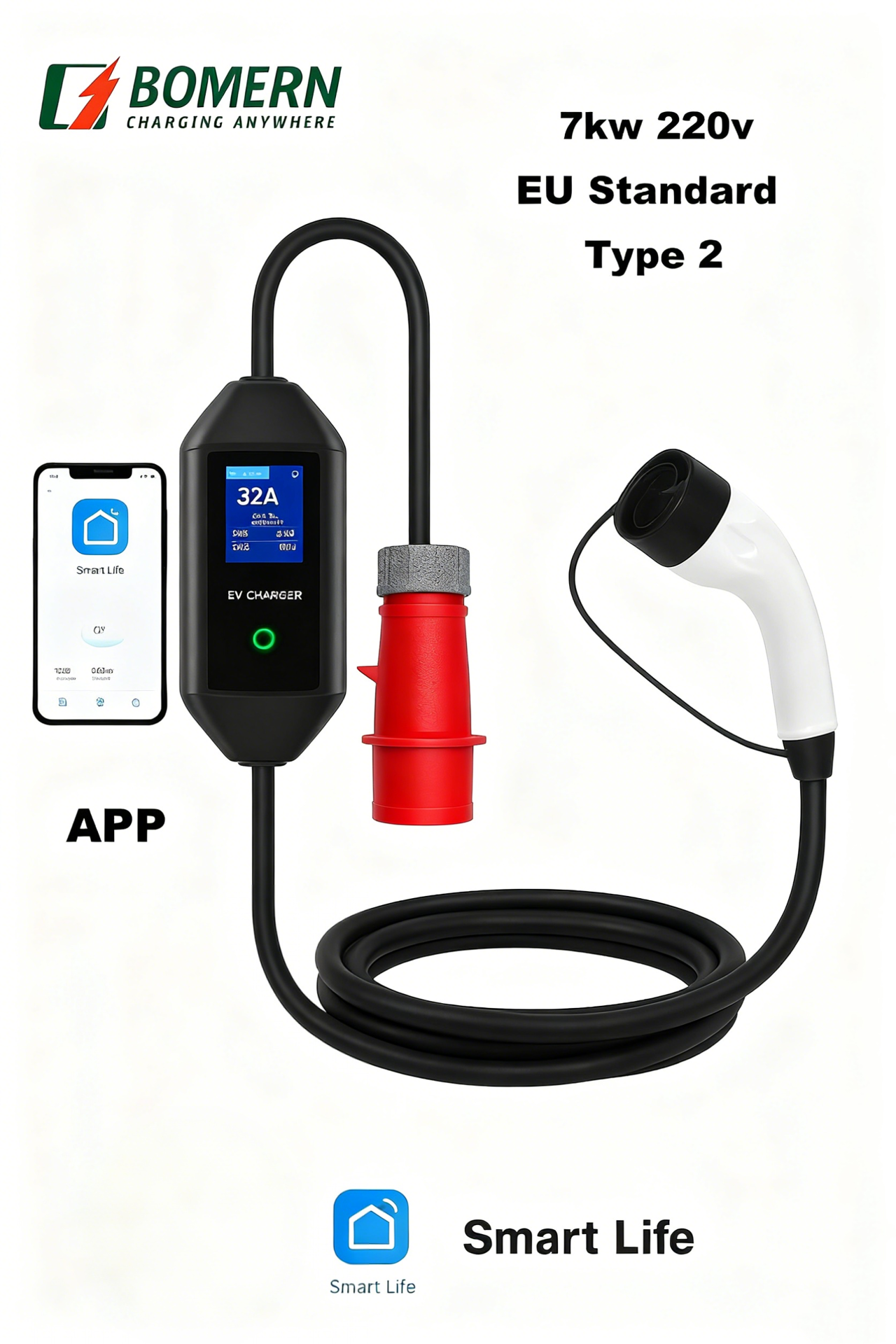
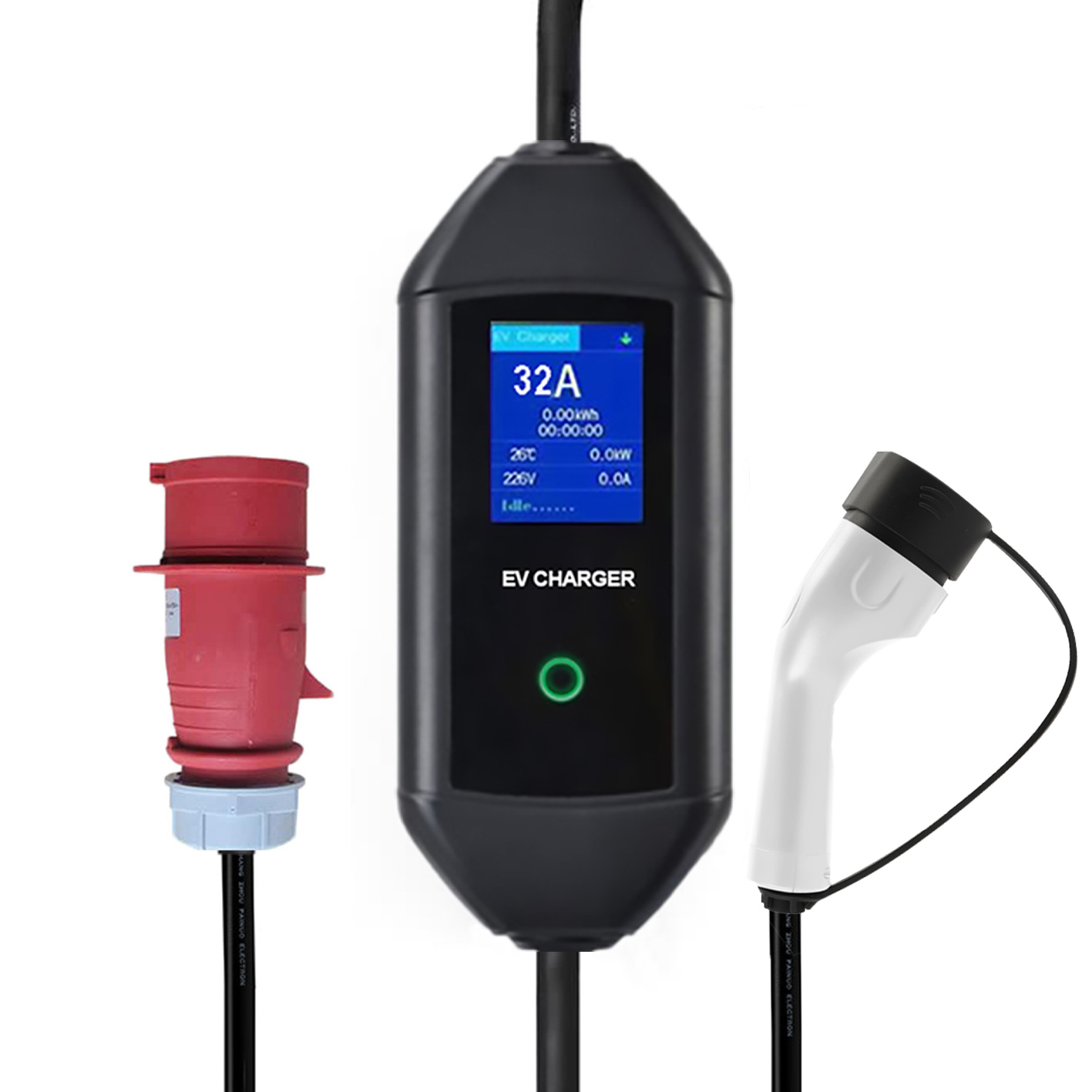
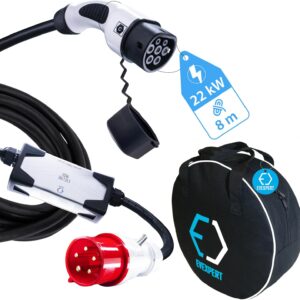
The BOMERN CEE 5-pin model is a portable Mode 2 charging cable for a Type 2 electric car that takes its supply from a 32 A CEE industrial socket and charges at up to 7.4 kW on a single phase. Beyond the higher single-phase rate, its distinguishing features are Wi-Fi control from a phone app and a delayed-start timer, backed by a built-in Type B residual-current device.
7.4 kW from a 32 A single-phase supply
This model reaches 7.4 kW by drawing 32 A on a single phase of a CEE 5-pin socket, roughly double the 3.7 kW a 16 A Schuko outlet can give. The full rate depends on two things being present: a 32 A supply at that socket, and a car whose onboard AC charger accepts around 7.4 kW single-phase. Many EVs do; some limit single-phase intake below that, in which case the car sets the ceiling rather than the cable.
A CEE 5-pin label alone does not guarantee a 32 A circuit — confirm the socket and its protection are rated for a sustained 32 A draw before charging at the top setting.
Wi-Fi app control and the display
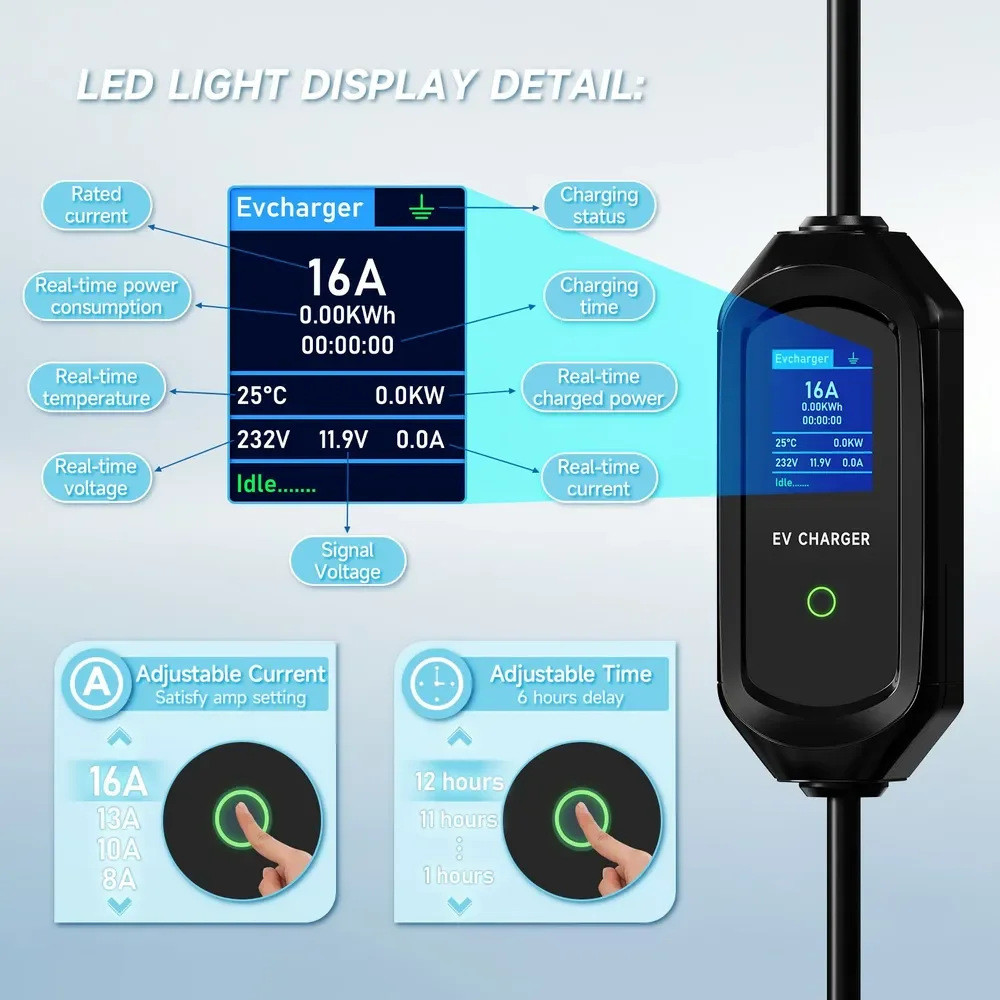
The charger connects over Wi-Fi and can be managed from a phone app, so you can start, stop or schedule a session and check its progress without standing at the car. On the unit itself, a 0.96″ OLED display shows live status and any diagnostic error code, giving you the same information at a glance when you are next to it.
Delayed start for a cheaper tariff
A delayed-start timer postpones charging by up to 12 hours. Combined with the app, it makes it easy to schedule a session for the overnight low-tariff window, so the car charges when electricity is cheapest without you needing to be present to begin it.
Residual-current protection and diagnostics
Safety is built around a Type B residual-current device combined with an A-EV RCD that detects smooth DC fault currents from 6 mA — the protection needed because an EV can, under a fault, produce a DC residual current that an ordinary Type A RCD may not catch. If a fault is detected, charging is cut immediately. At each connection the control electronics run a diagnostic check and, if something is wrong, show the matching error code on the display.
For weather, the unit is IP44 while connected and IP65 on the disconnected connectors with the caps fitted, so it resists splashing water in use and stays dust-tight and jet-protected between sessions. It is rated to run from −30 °C to +50 °C.
Technical specification
| Car-side connector | Type 2 / Mennekes (IEC 62196-2) |
|---|---|
| Supply socket | CEE 5-pin 32 A, 240 V single-phase |
| Maximum charging power | 7.4 kW |
| Maximum current | 32 A |
| Charging mode | Mode 2 |
| Connectivity | Wi-Fi with phone app |
| Residual-current protection | Built-in Type B RCD with 6 mA DC detection |
| Delayed start | Up to 12 hours |
| Display | 0.96″ OLED |
| Ingress protection | IP44 connected / IP65 connectors capped and disconnected |
| Operating temperature | −30 °C to +50 °C |
| Cable length | 5 m |
| Control box dimensions | 235 × 100 × 52 mm |
| Colour | Black with white plug |
| Standards | IEC 61851-1, IEC 62196-2; CE (EU) |
| Warranty | 24 months |
| Supplied with | Carry bag and plug holder |
Frequently asked questions
Will I really get 7.4 kW?
Only if both the supply and the car allow it. You need a 32 A CEE 5-pin socket on a circuit rated for a sustained 32 A, and a car whose onboard charger accepts around 7.4 kW on a single phase. If the car limits single-phase intake, it — not the cable — sets the rate.
What can I do from the app?
Over Wi-Fi you can start, stop and schedule charging and monitor a session remotely, rather than operating everything at the car. The same status and any error code are also shown on the unit's OLED display.
Is this a three-phase charger?
No. It uses a 32 A CEE 5-pin socket but charges on a single phase, up to 7.4 kW. It is the higher-current single-phase option in the range, not a three-phase 11 or 22 kW unit.
Do I need a separate Type B RCD?
The Type B residual-current protection with 6 mA DC detection is built into the cable. Whether a particular socket or circuit needs other work is a matter for a qualified electrician.

Reviews
There are no reviews yet.