


Electric vehicles are becoming a more common sight on our roads with every passing year. Compared with petrol and diesel cars in the same class, the purchase price of an EV is now genuinely competitive, and for many drivers buying an electric car finally makes financial sense. So what are the main benefits of electric vehicles, and why should owning one be on your shortlist? Below are seven solid reasons.
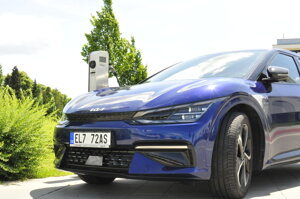
7 reasons to buy an electric vehicle
1. Cut your fuel costs by half
Switching to an electric car can lower your “fuel” bill by 50% to 60%. With petrol and diesel prices climbing and renewable electricity generation expanding fast, the cost of charging an EV is set to stay even more favourable than the price at the pump over the long term. The savings are larger still if you mostly drive around town, where an electric vehicle is at its most efficient.
2. Charge your EV at home, overnight
One of the biggest advantages of owning an electric vehicle is that you can recharge it at home while you sleep. You can use your own household electricity or take advantage of a cheaper off-peak tariff (a night-rate electricity plan). Unlike a combustion car, you’ll only ever “fill up” away from home when you set off on a longer journey.
And while public charging on a road trip might sound like a drawback at first, most EV drivers quickly come to appreciate the chance to take a short break, stretch their legs, and recharge themselves as well as the car. Yes, long trips need a little more planning than they would in a petrol car, but with today’s rapidly growing charging infrastructure it’s far less limiting than it might seem.
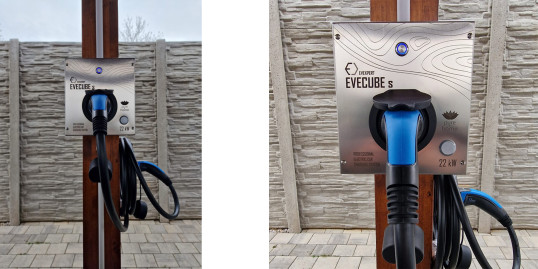
Tip: The EVECUBE home charger is an excellent choice for smart home EV charging that fits seamlessly around the everyday rhythm of your household. Planning a trip across Europe? You’ll find the most popular EV charging station maps here.
3. Lower maintenance costs
Because an electric vehicle has far fewer moving parts than a car with a combustion engine, EV maintenance costs are significantly lower. In fact, most EV owners say that windscreen wipers and tyres are the only parts they regularly replace. Even the brakes on an electric car wear out more slowly than those on a conventional vehicle, because the motor does much of the slowing work through regenerative braking, recovering energy back into the battery in the process.
4. A better driving experience
Electric cars deliver responsive acceleration and smooth regenerative braking. With the battery mounted low in the floor, they have a low centre of gravity that improves handling, comfort and safety. They’re also far quieter than petrol or diesel cars. Because electric motors respond more quickly than combustion engines and use energy more efficiently, the result is better performance and a far more enjoyable ride for the driver and passengers alike.
A small but genuinely welcome perk: thanks to companion apps, many electric vehicles let you pre-heat or pre-cool the cabin before you set off. You can switch on the heating or air conditioning while the car is still in your garage, with no exhaust fumes to worry about. Your EV will be at exactly the temperature you want before you even open the door.
5. Discounts and incentives for EV owners
Another major benefit of owning an electric vehicle is the range of discounts and incentives available. In the Czech Republic, electric vehicles can currently use the motorways free of charge. In major cities they can park for free in designated zones (for example, Prague’s blue zone). An EV also gives you access to city centres that otherwise restrict combustion-engine traffic, such as Rotterdam, London, Oslo and others.
Tip: Grants for home EV charging stations are currently available through the New Green Savings (Nová zelená úsporám) programme — see our article for details.
6. Electricity is renewable
Fossil fuels come with two fundamental problems: reserves are finite, and they are distributed unevenly around the world. Their price therefore depends not only on supply, but on the political situation too. On top of that, burning them damages the environment. According to the Environmental Protection Agency, transport has accounted for around 29% of greenhouse gas emissions since 2019.
Electricity, by contrast, is renewable, and you can even generate it at home with solar panels. Renewable energy is one of the most dynamic sectors out there, and it enjoys strong political backing. In the years ahead we can expect a clear shift towards a cleaner, more self-sufficient energy mix that makes electric vehicles greener still.
7. Cleaner, healthier cities
All of this makes electric vehicles an attractive alternative for anyone who cares about the climate and the environment. Beyond greenhouse gas emissions, cars are also a leading source of urban air pollution. Electric vehicles produce no tailpipe emissions, so they have no direct impact on air quality in the cities where they’re driven.*
In stop-and-go traffic, an EV draws far less power than a combustion car. It uses only enough energy to keep the vehicle and its infotainment systems running while it waits for your foot to touch the accelerator again. If you regularly find yourself stuck in traffic jams, this is an advantage you’ll be glad of.
*Even when we factor in the pollution created by generating electricity at a conventional power plant, electric vehicles remain a much cleaner option. The resulting emissions are not only lower overall, but are also captured and treated far more efficiently right at the power plant.
Frequently asked questions about electric vehicles
How much can you save on fuel with an electric car?
Most drivers save between 50% and 60% compared with petrol or diesel, and the savings are even greater for mainly city driving. Charging at home on an off-peak night tariff stretches those savings further.
Can you charge an electric vehicle at home?
Yes. A home EV charger such as the EVECUBE lets you recharge overnight using your own electricity or a cheaper night-rate tariff. You’ll typically only need public charging stations on longer trips.
Are electric cars cheaper to maintain?
Generally, yes. With far fewer moving parts and regenerative braking that reduces brake wear, EVs usually cost less to maintain than combustion cars, with tyres and wiper blades being the most common replacements.
Are electric vehicles really better for the environment?
Electric vehicles produce zero tailpipe emissions, and even accounting for electricity generation their overall emissions are lower and more efficiently controlled. As the grid shifts towards renewable energy, EVs become cleaner over time.